
Electricity Price in Norway
The electricity price in Norway varies by bidding zone and season, but the government's Norway Price scheme caps the household rate at 50 øre/kWh for a set consumption level. On top of that, you pay a grid rent fee and a small supplier markup.
Key takeaways
- Norway uses five bidding zones (NO1–NO5), so prices differ by region — southern zones tend to be higher.
- The government's Norway Price scheme sets a baseline of 50 øre/kWh for households in 2026.
- Spot-price contracts from providers like Tibber, Fortum, and Klarkraft add a small markup (approximately 3.4–5.9 øre/kWh) plus a monthly fee.
- Strøm.no lets you compare multiple electricity suppliers free of charge.
- Your total electricity bill includes three parts: the spot price, grid rent (nettleie), and the supplier's own fees.
Providers: electricity price in norway
- spotpris med lite påslag eller fastpris i 2 år
- spotprisavtale uten bindingstid
- du kan velge Norgespris
- spotpris + påslag 3,40 øre/kWh
- abonnement 49 kr/mnd
- ingen bindingstid eller bruddgebyr
- 49 kr/mnd + 5,90 øre/kWh
- ingen bindingstid
- eFaktura 0 kr, papirfaktura 7 kr
- 39 kr/mnd
- spotpris + 3,9 øre/kWh inkl. mva.
- ingen bindingstid
- flere strømleverandører konkurrerer om å gi deg tilbud
- gratis for deg
What Does the Electricity Price in Norway Actually Look Like?
The electricity price in Norway is based on the Nordic spot market operated by Nord Pool. Each hour has its own price, and that price differs across Norway's five bidding zones (NO1 through NO5). In practice, a typical household in 2026 pays the government-backed Norway Price of 50 øre/kWh for a capped consumption volume, plus grid rent and a supplier markup.
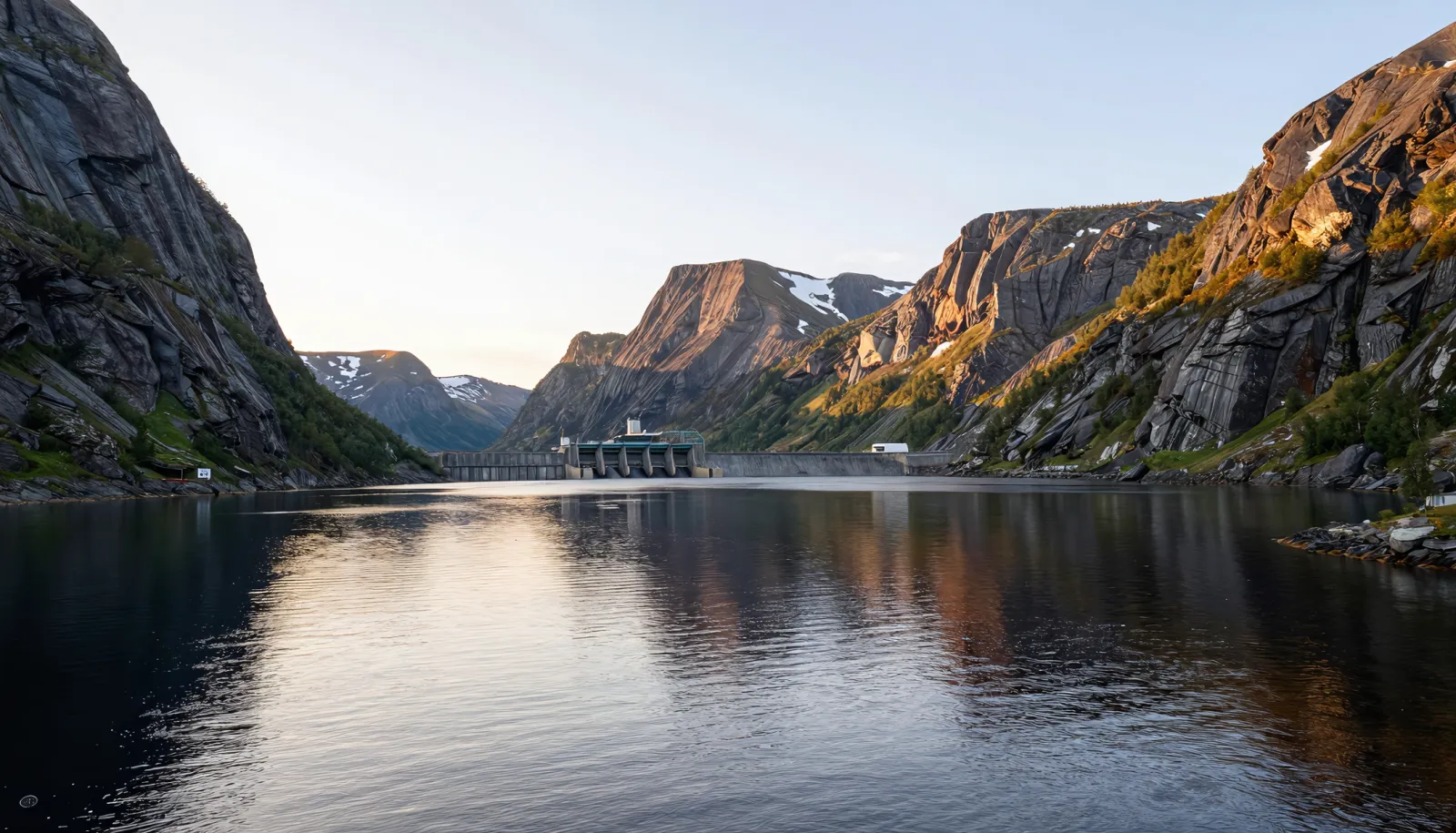
Because a large share of Norway's electricity comes from hydropower, prices are heavily influenced by reservoir levels, snowmelt, and rainfall. Dry years push prices up; wet years bring them down.
Norway's electricity is largely hydropower-based — but your final bill depends on your bidding zone, your supplier's markup, and the grid rent in your area.
The Norway Price Scheme — How It Protects Your Bill
The Norwegian government introduced the "Norway Price" to ensure predictable and stable electricity prices for consumers. Under this scheme, households receive support that effectively caps their price at 50 øre/kWh for a defined consumption level.
Key Features of the Norway Price
- Consumption cap: the subsidy applies up to a set number of kWh per household. Usage above the cap is billed at the spot price.
- Contract duration: the scheme is designed to run for multiple years, giving households long-term predictability.
This means that even when spot prices spike during cold winters, most Norwegian households are shielded from the worst of it. Your electricity supplier handles the billing automatically, and the subsidy is applied as a deduction.
Norway's Five Bidding Zones and the Electricity Price in Each
Norway is divided into five price areas — NO1 (Oslo / East), NO2 (Kristiansand / South), NO3 (Trondheim / Central), NO4 (Tromsø / North), and NO5 (Bergen / West). Southern zones (NO1 and NO2) are generally more connected to European markets, which can influence prices. Northern zones (NO3 and NO4) often have access to abundant local hydro capacity.
| Bidding Zone | Region | Typical Price Tendency |
|---|---|---|
| NO1 | Eastern Norway (Oslo) | Generally higher — more connected to continental markets |
| NO2 | Southern Norway (Kristiansand) | Generally higher — export cable connections |
| NO3 | Central Norway (Trondheim) | Generally lower — strong local hydro supply |
| NO4 | Northern Norway (Tromsø) | Often lowest — surplus production, limited export capacity |
| NO5 | Western Norway (Bergen) | Moderate — depends on reservoir levels |
If you are moving to Norway, your bidding zone is determined by your address. You cannot choose a different zone, but you can choose your electricity supplier within your zone.
Is Electricity Cheap in Norway Compared to Other Countries?
Norway generates a large share of its electricity from hydropower, which has very low marginal production costs. The combination of abundant hydropower and the Norway Price subsidy helps keep costs relatively low for residents.
For context, a household using a significant amount of electricity for heating may still find the total bill manageable thanks to the subsidy. However, grid rent (nettleie) adds a variable amount depending on your distribution company, so the total bill is higher than the spot price alone.
Newcomers to Norway are often surprised that electricity is a common heating source. This means electricity consumption can be higher than in countries that rely on gas. Even so, the Norway Price scheme helps keep costs predictable.
Three Parts of Your Electricity Bill in Norway
Your monthly electricity bill is not just the spot price. It consists of three distinct components, and understanding each helps you control costs.
- Spot price (strømpris): the hourly market price from Nord Pool, measured in øre/kWh. This is the part that fluctuates.
- Grid rent (nettleie): a fee paid to your local grid company for transporting electricity to your home. You cannot choose your grid company — it is determined by your address. Grid rent typically includes a fixed monthly fee plus a variable per-kWh charge.
- Supplier markup and fees: your chosen electricity supplier charges a monthly subscription fee and a small per-kWh markup on top of the spot price.
Taxes (electricity tax and VAT at 25 %) are included in the final amount. The Norway Price subsidy is applied as a deduction on your bill when spot prices exceed the threshold.
Compare Electricity Providers — Electricity Price in Norway by Supplier
Choosing the right supplier can save you several hundred kroner per year. Below is a comparison of popular spot-price providers based on their published terms.
| Provider | Monthly Fee | Markup (øre/kWh) | Binding Period | Credit Check Required | Go to |
|---|---|---|---|---|---|
| Tibber | 49 kr/mnd | 3,40 | None | Yes | Go to → |
| Fortum | 49 kr/mnd | 5,90 | None | Yes | Go to → |
| Klarkraft | 39 kr/mnd | 3,9 (incl. VAT) | None | Yes | Go to → |
Tibber charges a spot price plus a markup of 3,40 øre/kWh and a subscription of 49 kr/mnd, with no binding period or cancellation fee. Fortum charges 49 kr/mnd plus 5,90 øre/kWh, also without binding. Fortum offers eFaktura at no extra cost, while paper invoices cost 7 kr. Fortum also runs a refer-a-friend programme worth 400 kr each. Klarkraft has the lowest monthly fee at 39 kr/mnd with a markup of 3,9 øre/kWh including VAT.
All three providers require an approved credit check before you can sign up. None of them lock you into a contract.
If you want to compare even more suppliers side by side, Strøm.no lets multiple electricity providers compete to give you an offer — free of charge for you.

How to Switch Your Electricity Supplier in Norway
Switching suppliers is free and straightforward. Your new provider handles the transition, and you will not experience any interruption in power.
- Check your current contract: log in to your existing supplier's portal and note your contract type and any notice period (most spot-price contracts have none).
- Compare offers: use Strøm.no or visit provider websites like Tibber, Fortum, or Klarkraft directly.
- Sign up online: you will need your personal number (fødselsnummer) or D-number, your address, and your meter number (found on your grid company's invoice).
- Approve the credit check: all major suppliers require a credit assessment before activating your account.
- Wait for the switch: the new supplier notifies your old one. The switch typically takes effect within a few weeks.
You keep the same grid company regardless of which supplier you choose. Grid rent stays the same.
Newcomer Checklist: Setting Up Electricity When You Move to Norway
If you have just arrived in Norway, setting up electricity is one of the first things you need to do. Here is a practical checklist that the top-10 search results rarely cover in one place.
- Get a D-number or fødselsnummer: a D-number is a temporary ID number from Skatteetaten for people not registered as residents. You will need either a D-number or a fødselsnummer to sign an electricity contract.
- Contact the grid company: when you move into a new address, the local grid company (nettselskap) needs to know. Your landlord may have done this already — ask.
- Choose a supplier quickly: if you do not choose a supplier, you will be placed on a default contract (leveringsplikt) with your grid company, which is usually more expensive.
- Read your meter: note the meter reading on the day you move in. Smart meters (AMS) report automatically in most Norwegian homes.
- Budget for winter: electricity consumption in Norway peaks from November to March. Electrically heated homes use considerably more electricity during winter months, so plan your budget accordingly.
For financial guidance or debt concerns, NAV offers free financial counselling at 55 55 33 39.
Norway Cost of Electricity — A Monthly Example in Kroner
Here is a simplified example for a household in bidding zone NO1 using 1 000 kWh in a winter month, based on the Norway Price of 50 øre/kWh and Tibber's published fees.
| Cost Component | Amount (NOK) |
|---|---|
| Electricity (1 000 kWh × 50 øre) | 500 |
| Tibber markup (1 000 kWh × 3,40 øre) | 34 |
| Tibber monthly fee | 49 |
| Grid rent (varies by area) | Varies — check your grid company |
| Total estimate | 583 + grid rent |
This is a rough illustration. Your actual bill depends on your bidding zone's spot price, your grid company's tariff, and your consumption pattern. In summer months, consumption drops sharply and bills can be considerably lower.
Sist kontrollert oktober 2026.
Questions and answers: electricity price in norway
How much is electricity per kWh in Norway?
Under the Norway Price scheme in 2026, households pay a capped rate of 50 øre/kWh for a defined consumption volume. Above that cap, you pay the hourly spot price from Nord Pool, which varies by bidding zone and season. Grid rent and supplier fees are added on top.
Why is electricity in Norway so cheap?
Norway generates a large share of its electricity from hydropower, which has very low marginal production costs. Combined with the government's Norway Price subsidy scheme, this helps keep household prices relatively low. However, southern bidding zones connected to continental markets can experience higher prices during peak demand.
What is the average cost of 1 kWh?
The average total cost of 1 kWh for a Norwegian household — including spot price, grid rent, taxes, and supplier fees — varies depending on the region and time of year. The Norway Price scheme reduces the effective cost for consumption within the cap. Check your supplier's app or your latest bill for your actual per-kWh cost.
How much per kWh today?
Today's hourly electricity price is published in real time by Nord Pool and displayed by providers like Tibber. Prices change every hour and differ across Norway's five bidding zones. Check your supplier's app or Nord Pool's website for the current rate in your area.
How much does electricity cost in Norway per month?
A typical Norwegian household's monthly electricity bill depends on consumption, bidding zone, grid rent, and supplier fees. In winter, electrically heated homes use considerably more electricity, pushing bills higher. In summer, consumption and costs drop significantly. Use the supplier comparison above to estimate your costs.
Is electricity free in Norway?
No, electricity is not free in Norway. However, it is subsidised through the Norway Price scheme, which caps the household rate at 50 øre/kWh for a set consumption level. You also pay grid rent and a supplier markup.
See which supplier offers the lowest markup in your bidding zone — free comparison via Strøm.no.
Compare electricity deals – Bærum EnergiSources
Advertiser content: SmartMoney may earn a commission when you continue via buttons marked "Ad". It costs you nothing extra, and the order is not a ranking.