
Bank Account Norway Foreigners: How to Open One Step by Step
Opening a bank account in Norway as a foreigner requires a valid passport, a D-number or fødselsnummer from Skatteetaten, and an in-person or online application at a Norwegian bank. The process can take from a couple of weeks to six weeks depending on the bank and your documentation. Here is everything you need to know.

Key takeaways
- You need a D-number (temporary ID) or fødselsnummer (national ID number) before most banks will open an account.
- Several major banks — including DNB and SpareBank 1 — accept customers without BankID, but expect a setup fee of NOK 650–1 000.
- BankID requires a Norwegian fødselsnummer; with only a D-number you will use a limited 'without BankID' login.
- Bring your passport (not residence card alone) to the bank — many banks do not accept oppholdskort as valid ID.
- Vipps, eFaktura, and Avtalegiro become available once your account and BankID are active.
Providers: bank account norway foreigners
Free to check. You decide – we show the example and the terms.
 Revolut Standard
- Use an app-managed account and payment card for everyday spending.
Go to Revolut StandardFree and non-binding Wise account
- Manage money in several currencies and make international transfers with an account and card available in Norway.
Go to Wise accountFree and non-binding N26 account
- Manage a European bank account and card payments through the N26 app.
Go to N26 accountFree and non-binding
Bank Account Norway Foreigners: What You Need Before Applying
Every bank in Norway must verify your identity under anti-money-laundering rules. That means you need two things before you walk into a branch: a valid passport and a Norwegian identification number.
A D-number is a temporary ID number issued by Skatteetaten (the Norwegian Tax Administration) for people who are not registered as permanent residents. If you are staying longer and are registered in the National Population Register, you receive a fødselsnummer instead. Most banks accept either, but a fødselsnummer unlocks more services — including BankID.
If you are a non-EEA citizen, you will also need proof of your residence permit (oppholdstillatelse). However, note that several banks, such as SpareBank 1 Nordmøre, explicitly state that an oppholdskort alone is not valid identification — you must bring your passport.
How to Get a D-Number from Skatteetaten
A D-number is the first step for most foreigners opening a bank account in Norway. You can receive one by registering with Skatteetaten, either through your employer or by visiting a tax office (skattekontor) in person.
- Your employer submits a request to Skatteetaten on your behalf, or you apply directly at a tax office with your passport and employment contract or other documentation.
- Skatteetaten processes the application and issues a D-number.
- You receive a letter with your D-number at your registered Norwegian address.
Once you have the D-number, you can approach a bank. Keep in mind that some banks also ask for a foreign tax identification number (TIN) if you hold only a D-number — SpareBank 1 Nord-Norge states this requirement on their website.

How to Open a Bank Account in Norway as a Foreigner: Step by Step
The exact process varies by bank, but the core steps are the same across Norway.
- Gather documents: Valid passport, D-number or fødselsnummer, proof of address in Norway, and — for non-EEA citizens — your residence permit.
- Choose a bank: Compare fees, branch locations, and whether the bank accepts customers without BankID (see comparison table below).
- Start the application: Some banks let you begin online; others require you to book an appointment at a branch for ID verification.
- Attend ID verification: Bring originals of all documents. The bank photographs or scans them.
- Wait for confirmation: Processing times vary — DNB states you will receive an email within two weeks, while OBOS-banken states the process can take up to six weeks.
- Receive your debit card: SpareBank 1 Nord-Norge states cards arrive within approximately 16 days after signing.
- Set up online banking: If you have BankID, activate full digital access. Without BankID, you use a limited login.
Tip for newcomers: start the D-number process as soon as you arrive — every week you wait delays your bank account.
Bank Account Norway Foreigners: Comparing Banks That Accept You Without BankID
Not every Norwegian bank makes it easy for foreigners without BankID. Below is a comparison of banks that explicitly offer account opening without BankID, based on information from their websites (last verified October 2026).
| Bank | Without BankID? | Setup Fee | Key Requirement | Estimated Timeline |
|---|---|---|---|---|
| DNB | Yes | NOK 650 | Fødselsnummer or D-number | Email within 2 weeks |
| SpareBank 1 Nord-Norge | Yes (from age 18) | NOK 650 | Fødselsnummer or D-number + TIN if D-number | Card in ~16 days after signing |
| SpareBank 1 Sør-Norge | Yes (in-branch only) | Not stated | Valid passport + D-number (oppholdskort not accepted) | Set up at branch visit |
| SpareBank 1 Nordmøre | Yes (book appointment) | Not stated | Passport + oppholdskort for non-EU/EEA | After ID check appointment |
| OBOS-banken | Yes (call to start) | NOK 1 000 | Fødselsnummer or D-number, registered address, passport, income docs, bank reference letter, residence permit for non-EEA | Up to 6 weeks |
Sbanken (part of DNB) requires BankID to become a customer, so it is not an option for newcomers who have not yet obtained a fødselsnummer and BankID.
As you can see, DNB and SpareBank 1 Nord-Norge offer the most straightforward process for foreigners, both at a fee of NOK 650. OBOS-banken has the most extensive documentation requirements and the longest stated wait — up to six weeks — but may suit those who already bank with OBOS for housing reasons.
How to Get BankID Norway as a Foreigner
BankID is Norway's electronic identification system, and you need it for online banking, signing loan applications, accessing public services, and more. However, BankID requires a Norwegian fødselsnummer — a D-number alone is not enough.
Once you have a fødselsnummer (typically after registering as a resident with Skatteetaten and the National Population Register), you can request BankID through your bank. The bank verifies your identity in person, and you receive BankID credentials.
Until you have BankID, you will use a limited "without BankID" login for your bank account. This means you can check balances and make transfers, but you cannot sign digital contracts or access services that require BankID.
Can I open a bank account in Norway without BankID?
Yes. As shown in the table above, DNB, several SpareBank 1 branches, and OBOS-banken all accept customers without BankID. You will have reduced digital functionality until you upgrade to BankID with a fødselsnummer.
What to Do After Getting Your Bank Account in Norway
Once your account is active, several essential Norwegian services become available to you.
- Vipps: Norway's widely used mobile payment app. Requires BankID.
- eFaktura: Digital invoices sent directly to your online bank.
- Avtalegiro: Automatic direct debit for recurring bills.
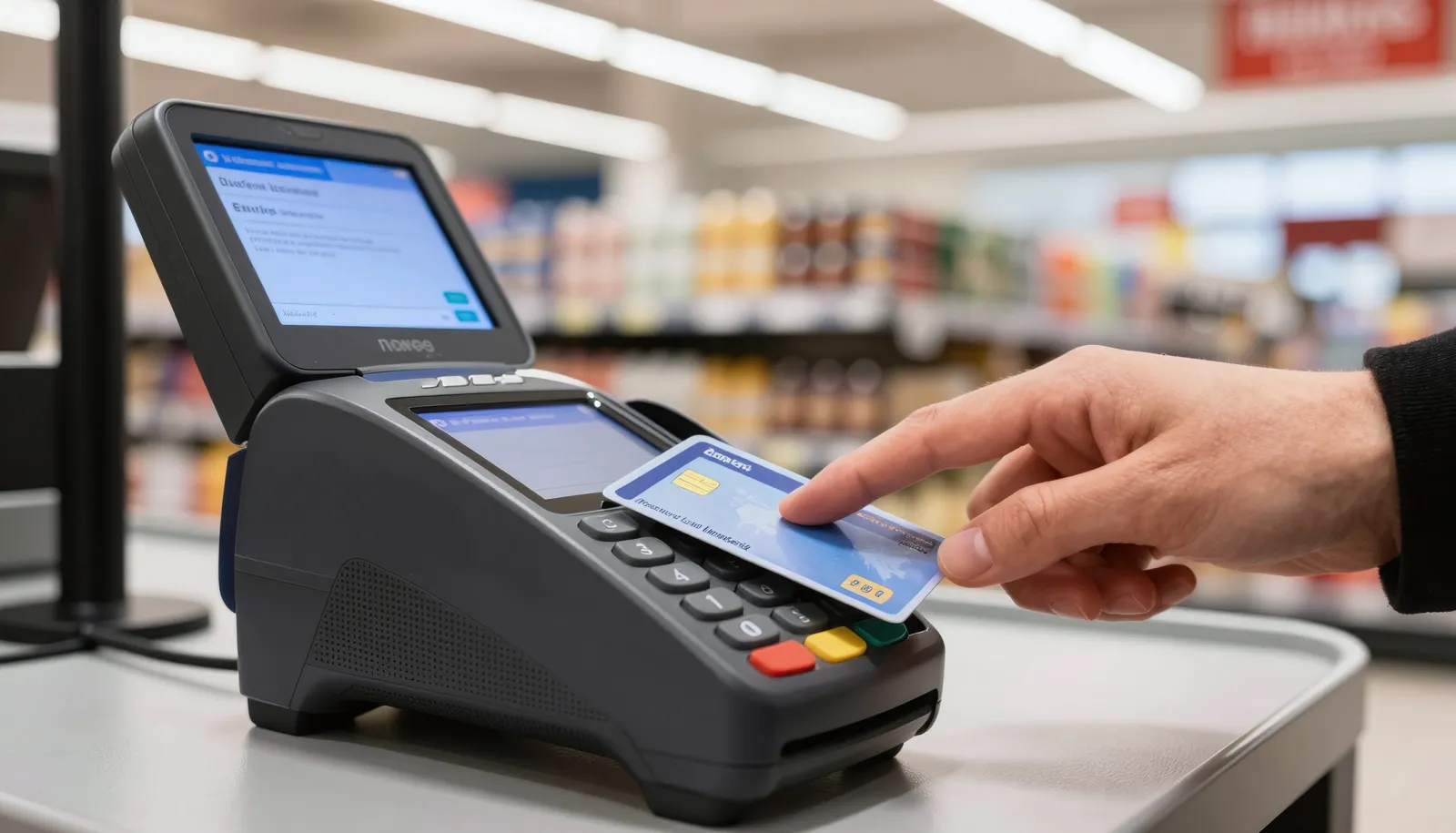
- Contactless payment (kontaktløs betaling): Tap your Norwegian debit card at terminals once you receive your card.
If you plan to apply for a loan in Norway later, be aware that online loan applications are signed with BankID and most lenders require a fødselsnummer. Norwegian lending rules (utlånsforskriften) state that total debt may not exceed five times your gross annual income. Unsecured consumer debt is registered in Gjeldsregisteret (operational since 2019), which banks check before granting credit.
Tips to Speed Up Your Bank Account Norway Foreigners Process
The biggest delay is usually waiting for your D-number or fødselsnummer. Here is a checklist to move things along:
- Apply for your D-number or fødselsnummer at Skatteetaten as soon as you arrive — do not wait until you need the bank account.
- Choose a bank with a branch near you and book an appointment in advance.
- Bring all documents to your first visit: passport, ID number, proof of address, employment contract, and — if required — a reference letter from your home bank in English.
- Ask the bank upfront whether they charge a setup fee and how long the process takes.
- If you are from outside the EU/EEA, have your residence permit (oppholdstillatelse) ready — not just your oppholdskort.
Following this checklist and having all documents ready can help reduce unnecessary delays in the process.
Sending Money Between Norway and Your Home Country
Once your Norwegian bank account is active, you may want to send money abroad or receive transfers from family. Norwegian banks offer international transfers via IBAN and SWIFT, but fees and exchange-rate markups vary.
For better rates, many newcomers use regulated money-transfer services. Compare the exchange-rate markup and any flat fee before choosing a provider. Always use services that are regulated by a financial authority (such as Finanstilsynet in Norway or equivalent in the provider's home country).
Receiving money into your Norwegian account is straightforward: share your IBAN and the bank's SWIFT/BIC code with the sender.
Questions and answers: bank account norway foreigners
Can I open a bank account in Norway as a non-resident?
Yes, non-residents can open a bank account in Norway if they have a D-number from Skatteetaten and a valid passport. A D-number is a temporary identification number for people not registered as permanent residents. Note that without a fødselsnummer you will not have access to BankID, which limits your online banking features.
Which Norwegian bank is best for foreigners?
DNB and SpareBank 1 are commonly recommended banks for foreigners because they explicitly accept customers without BankID. DNB charges a setup fee of NOK 650 and states you will receive an email within two weeks. The best choice depends on your location, language needs, and whether you need branch access.
Which bank allows foreigners to open an account?
DNB, SpareBank 1 Nord-Norge, SpareBank 1 Sør-Norge, SpareBank 1 Nordmøre, and OBOS-banken all allow foreigners to open accounts without BankID. Each has different documentation requirements and fees — DNB and SpareBank 1 Nord-Norge charge NOK 650, while OBOS-banken charges NOK 1 000 and states the process may take up to six weeks.
Which banks allow non-resident accounts?
Several Norwegian banks accept non-residents with a D-number. DNB and SpareBank 1 branches are among the most accessible options. Sbanken requires BankID and is therefore not available to non-residents who lack a fødselsnummer. Always confirm current requirements directly with the bank, as policies can change.
How do I get BankID in Norway as a foreigner?
You need a Norwegian fødselsnummer (national ID number) to get BankID — a D-number is not sufficient. Once you are registered as a resident and have received your fødselsnummer from Skatteetaten, visit your bank branch with your passport to request BankID activation. The bank will verify your identity and set up your BankID credentials.
How long does it take to open a bank account in Norway?
Processing times vary by bank. DNB states you will receive an email within two weeks of applying. SpareBank 1 Nord-Norge states your card arrives within about 16 days after signing. OBOS-banken states the process can take up to six weeks. Having all documents ready at your first appointment helps reduce delays.
See which Norwegian bank fits your situation and start your application today.
Compare your options – Revolut StandardSources
Advertiser content: SmartMoney may earn a commission when you continue via buttons marked "Ad". It costs you nothing extra, and the order is not a ranking.